

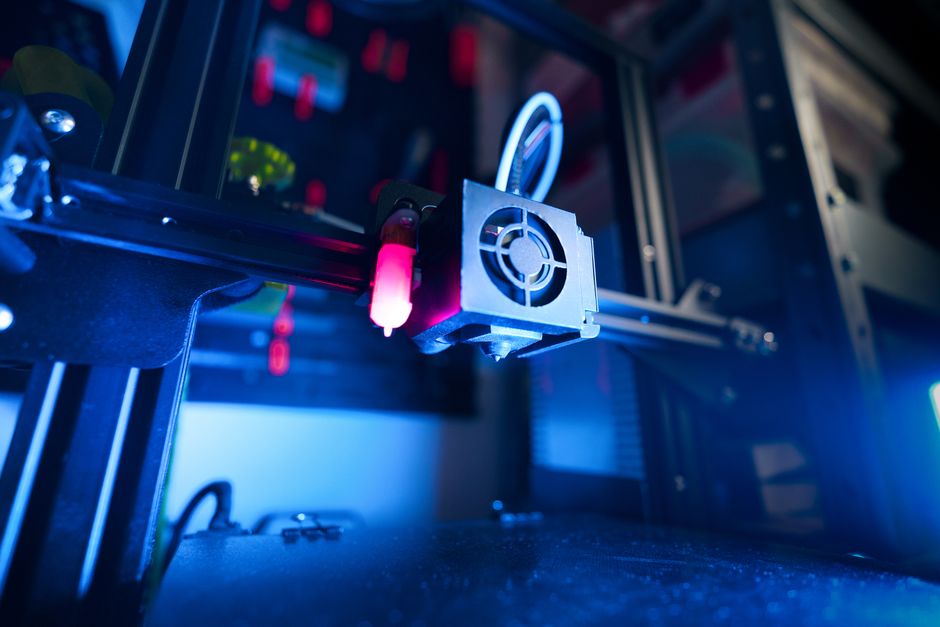
Precision Manufacturing Techniques in Modern Engineering Applications have transformed how industries approach product development and quality control. Manufacturing processes that once relied on manual craftsmanship now integrate computerized systems capable of achieving tolerances measured in microns. This shift has enabled engineers to design components with unprecedented complexity while maintaining consistency across thousands or millions of units. The aerospace sector, for example, demands parts that meet specifications within plus or minus five microns, a standard that would have been impossible to achieve economically just thirty years ago. Industries ranging from medical devices to automotive manufacturing now depend on these advanced methods to remain competitive in global markets. Modern precision techniques combine cutting-edge technology with rigorous quality assurance protocols to deliver components that perform reliably under extreme conditions.
Computer numerical control machining dominance
CNC machining represents the backbone of contemporary precision manufacturing, offering repeatability and accuracy that manual operations cannot match. These automated systems follow digital instructions to remove material from solid blocks, creating complex geometries with minimal human intervention. Five-axis CNC machines can manipulate cutting tools along multiple planes simultaneously, producing intricate shapes that would require numerous setups on conventional equipment. The automotive industry uses CNC processes to manufacture engine blocks with cylinder bore tolerances of 0.01 millimeters, ensuring optimal piston performance and fuel efficiency. Tool life management systems automatically compensate for wear, maintaining dimensional accuracy throughout production runs that may span several days. What makes CNC technology particularly valuable is its ability to switch between different part designs simply by loading new programming code, reducing setup time from hours to minutes. Manufacturers report that CNC operations typically achieve first-pass yield rates exceeding ninety-five percent when properly calibrated and maintained.
Laser cut gasket production and sealing solutions
Advanced cutting technologies have revolutionized how manufacturers create components requiring intricate patterns and tight dimensional control. A laser cut gasket exemplifies precision manufacturing’s capability to produce complex sealing solutions for demanding applications. The laser beam vaporizes material along programmed paths with kerf widths as narrow as 0.1 millimeters, creating clean edges that traditional die cutting cannot achieve. Industries dealing with high-pressure fluid systems require gaskets with exact dimensions to prevent leakage that could compromise safety or performance. Chemical processing plants, for instance, specify laser cut gasket components because the heat-affected zone remains minimal, preserving material properties critical for chemical resistance. The technology accommodates materials ranging from soft rubber compounds to reinforced composites without requiring expensive tooling changes. Manufacturers can produce prototype gaskets in hours rather than weeks, accelerating product development cycles and reducing time to market for new equipment designs.
Additive manufacturing and three-dimensional printing
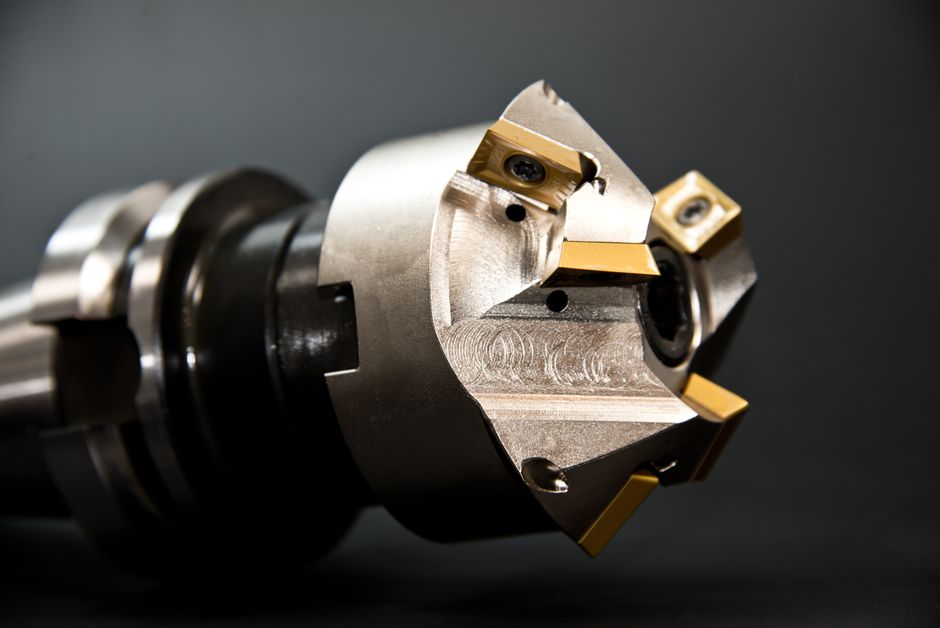
Additive processes build components layer by layer, enabling geometric freedom impossible with subtractive methods. Metal powder bed fusion creates fully dense parts by selectively melting powdered alloys with focused energy beams, producing components with mechanical properties comparable to traditionally manufactured equivalents. The medical industry has embraced this technology for patient-specific implants, creating hip replacements and spinal fusion devices customized to individual anatomy from CT scan data. Build chambers measuring up to 800 millimeters cubed accommodate substantial components while maintaining feature resolution below fifty microns. What challenges do engineers face when implementing additive techniques? Material certification remains a significant hurdle, as aerospace and medical regulators require extensive testing to validate that printed parts meet safety standards. Post-processing steps including heat treatment and surface finishing often consume more time than the actual printing process. Nevertheless, additive manufacturing eliminates the need for costly tooling, making it economically viable for production runs ranging from single units to several thousand pieces.
Electrical discharge machining for complex geometries
EDM processes remove material through controlled electrical sparks that erode conductive workpieces with exceptional precision. Wire EDM uses a thin brass or copper wire as an electrode, cutting through hardened tool steels and exotic alloys with surface finishes approaching mirror quality. The technology excels at creating intricate cavities, narrow slots, and sharp internal corners that milling operations cannot reach. Mold makers rely on EDM to produce injection mold cores with cooling channels positioned just millimeters beneath complex surface contours. Sinker EDM employs shaped electrodes to burn precise pockets into workpieces, achieving corner radii as small as 0.05 millimeters. The dielectric fluid continuously flushes away eroded particles, preventing surface contamination and maintaining dimensional accuracy throughout the process. Modern EDM machines incorporate adaptive control systems that adjust spark parameters in real time, optimizing material removal rates while preserving surface integrity. Production rates may seem slow compared to conventional machining, but EDM remains unmatched for applications requiring extreme precision in hardened materials.
Measurement systems and quality verification
Precision manufacturing means nothing without equally precise measurement capabilities to verify that components meet specifications. Coordinate measuring machines use touch probes or optical sensors to map three-dimensional surfaces with accuracy measured in single-digit microns. Manufacturers perform statistical process control by measuring sample parts at regular intervals, identifying trends that might indicate tool wear or thermal drift before defects occur. Laser scanning systems capture millions of data points in seconds, comparing actual component geometry against CAD models to detect deviations requiring correction. The concept of ba u refers to the fundamental tolerance unit in Japanese manufacturing philosophy, where “u” represents one micron and “ba” signifies the decimal multiplier. This systematic approach to tolerance specification ensures clear communication between design engineers and production personnel. Optical comparators project magnified silhouettes of small parts onto calibrated screens, enabling rapid verification of profile dimensions and angular relationships. In-process measurement systems now integrate directly into CNC machines, allowing automatic tool offset adjustments that maintain dimensional control without operator intervention. Advanced facilities maintain environmental controls that stabilize temperature within plus or minus one degree Celsius, preventing thermal expansion that could compromise measurement accuracy. The ba u framework emphasizes that precision must extend throughout the entire manufacturing chain, from initial design through final inspection.
Surface finishing techniques for critical applications
Component performance often depends as much on surface characteristics as on dimensional accuracy. Superfinishing processes use fine abrasive stones oscillating against rotating workpieces to achieve surface roughness values below 0.1 micrometers Ra. Hydraulic cylinder rods receive this treatment to minimize seal wear and prevent fluid leakage over millions of operating cycles. Electropolishing removes microscopic surface irregularities through controlled anodic dissolution, creating passive oxide layers that enhance corrosion resistance in stainless steel components. Medical implants undergo electropolishing to eliminate stress concentrations where bacteria might colonize and cause infections. Shot peening bombards surfaces with small spherical media, inducing compressive stresses that dramatically improve fatigue life in highly stressed components like aircraft landing gear. How do manufacturers select appropriate finishing techniques? The decision depends on functional requirements, material properties, and economic considerations balancing process cost against performance benefits. Lapping creates optically flat surfaces for gauge blocks and precision optics, using fine abrasive slurries to remove material at rates measured in nanometers per minute.
Integration of precision techniques in modern workflows
The true power of Precision Manufacturing Techniques in Modern Engineering Applications emerges when multiple technologies work together in coordinated production systems. Manufacturers now design hybrid machines combining additive and subtractive capabilities, building near-net shapes through printing before finishing critical surfaces through milling. Automated workpiece handling systems transfer components between machining centers, inspection stations, and finishing equipment without manual intervention, reducing handling damage and improving throughput. Real-time data analytics monitor thousands of process parameters simultaneously, using machine learning algorithms to predict maintenance requirements before failures occur. Smart factories integrate precision manufacturing equipment into networked systems where production schedules automatically adjust to material availability, machine capacity, and customer priorities. This convergence of mechanical precision and digital intelligence represents manufacturing’s future, where flexibility and accuracy coexist to meet increasingly demanding customer requirements across diverse industries.
